
INTERNATIONAL CONFERENCE ON
Digital Concrete: Machine Learning in Structural Health Monitoring
(ICDC-2026)
February 14-15, 2026
Conference Mode: Online
Publication: In Processing
ABOUT THE CONFERENCE
The International Conference on Digital Concrete: Machine Learning in Structural Health Monitoring – 2026 brings together global researchers, academicians, and industry professionals to explore how advanced artificial intelligence and data-driven technologies are reshaping the future of civil infrastructure. In the context of global sustainability goals, this conference emphasizes the critical role of intelligent digital solutions in addressing challenges related to material degradation, corrosion damage, and structural reliability. The conference serves as a platform for exchanging cutting-edge research, experimental insights, and practical case studies that demonstrate how AI-driven frameworks can revolutionise infrastructure assessment and maintenance. Through interdisciplinary dialogue, it promotes ethical and sustainable deployment of emerging technologies to build smarter, safer, and more adaptive infrastructure systems.
CALL FOR PAPERS
ICDC-2026 invites researchers, academicians, industry experts, and practitioners to submit original papers for the International Conference on Digital Concrete: Machine Learning in Structural Health Monitoring – 2026. Topics include Data driven modeling and prediction of corrosion damage in RC structural members, Structural Health Monitoring, Smart, Self-Sensing and functional concrete, Multimodal Data fusion and Hybrid modeling for Structural Assessment. Selected papers will be published in reputed journals and proceedings.
- Machine Learning Applications in Structural Health Monitoring (SHM) (SDG 9)
- Corrosion Detection and Modeling in Reinforced Concrete Structures (SDG 11)
- Digital Twins for Smart Infrastructure (SDG 13)
- AI and Computer Vision for Damage Identification (SDG 9)
- Data Fusion and Multisource Integration (SDG 17)
- Smart and Self-Sensing Concrete Materials (SDG 12)
- Predictive Modeling and Lifecycle Assessment (SDG 9) & (SDG12)
- Big Data Analytics in Construction and Materials Engineering (SDG 9)
- Non-Destructive Testing (NDT) and AI Integration (SDG 9) & (SDG 12)
- Structural Damage Forecasting under Environmental Stressors (SDG 13)
- AI-Driven Maintenance and Rehabilitation Strategies (SDG 9) & (SDG 11)
paper Submission link
Microsoft CMT Acknowledgment
Publication
Under Process
IMPORTANT DATES
Last date for Submission:
January 25, 2026
Notification of Acceptance:
January 31, 2026
Last date for Registration:
February 05, 2026
Date of Conference:
February 14-15, 2026
Note: Every communication will be made by e-mail:
prashant@itsr.co.in
AWARDS
Note: ICDC-2026 AWARDS (Best Paper Awards):
Criteria: The Best Paper Presentation award will be determined based on the originality, significance, and clarity of the research presented. Additionally, the effectiveness of the presentation, including communication skills and engagement with the audience, will also be considered.
Selection Process: Selection Process: A designated panel of judges, comprising esteemed experts in the field, will evaluate presentations during the conference sessions. Each judge will independently assess the presentations based on the predetermined criteria.
Announcement The winner of the Best Paper Presentation award will be announced during the closing ceremony of the conference. The recipient will be presented with a certificate of recognition and a token of appreciation.
REGISTRATION FEE
| Categories | Registration Fee |
|---|---|
| Academicians/Industry | 7000 INR |
| Research Scholars/Students | 6000 INR |
| Foreign Authors | 100 USD |
INSTRUCTIONS FOR THE AUTHORS
Papers must be submitted online using the Microsoft CMT, which is a completely web-based submission, peer-review, and
tracking system.
All pages must be numbered in the same order. Tables and figures can be included within the text or placed on other pages with appropriate captions (s).
The title of the paper, the author’s name(s), and entire institutional affiliation(s) should all be mentioned on the first page of the manuscript. There should also be an abbreviated title (for running heads).
A list of 4—6 keywords should be provided immediately after the abstract. These keywords should be relatively independent (coordinate index terms) and should best describe the paper as a whole.
All the references should be mentioned in alphabetical order.
The paper will be checked for plagiarism with turnitin, the similarity should be less than 15%.
NOTE: Submissions that do not follow the above instructions may be returned to the authors for correction before being published.
BLIND REVIEW POLICY
We are committed to timely evaluation and presentation/publication of fully approved papers at the FutureTech-2025. All submissions are subjected to a rigorous review procedure in order to maintain a high-quality publication. The following are the characteristics of the blind peer-review procedure:
Parallel submissions of the same Research Paper to a different Conference, Journals or Symposium will not be accepted.
Papers having content outside the scope will not be reviewed.
In accordance with FutureTech-2025 policy, submissions will be assessed by 3 experts as suggested by the organizing committee.
Presentation and publication related decision(s) are made by the Organizing Committee (FutureTech-2025), based on the reports given by the experts. The authors of papers that are not approved will be notified promptly and the decision taken by the organizing committee FutureTech-2025 will be the final verdict.
All the submitted papers are considered confidential documents. We expect our Board of Reviewing Editors and reviewers to treat the papers as confidential matters as well.
Editors and Reviewers must ensure the papers meet all the mentioned requirements.
Editors and reviewers engaged in the review procedure must state any conflict of interest arising from direct competition, collaboration, or other ties with any of the authors, and should withdraw themselves from situations where such conflicts prevent objective evaluation. The utilization of privileged information or ideas received via peer review for competitive benefit is prohibited.
Review reports should be made available on request to the Managing Editor if required.
The identities of the reviewers cannot be disclosed, and the peer review procedure is confidential.
KEYNOTE SPEAKERS
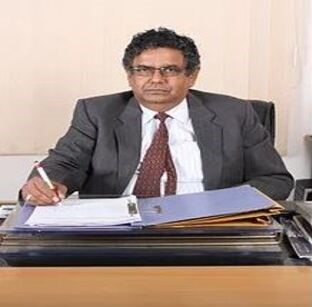
Prof. Dr. DP Kothari
Ex Director Incharge, IIT, Delhi
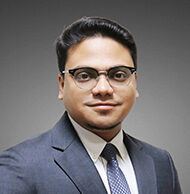
Dr. Indranath Chatterjee
Manchester Metropolitan University, Manchester, UK
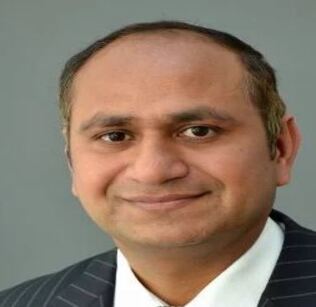
Prof. Dr. Mohan Lal Kolhe
University of Agder (Norway)
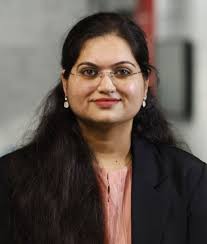
Dr. Shivani Sharma
Hitachi Energy, India
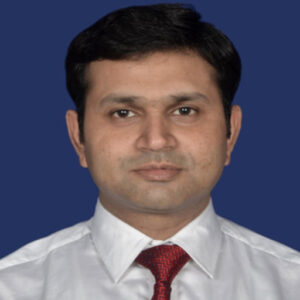
Dr. S B Goyal
City University, Malasiya
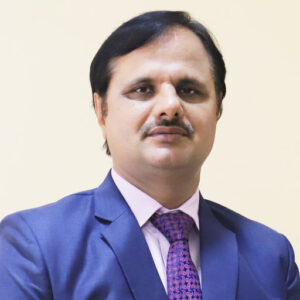
Dr. Shailendra Kumar
S. V. National Institute of Technology, Surat, India
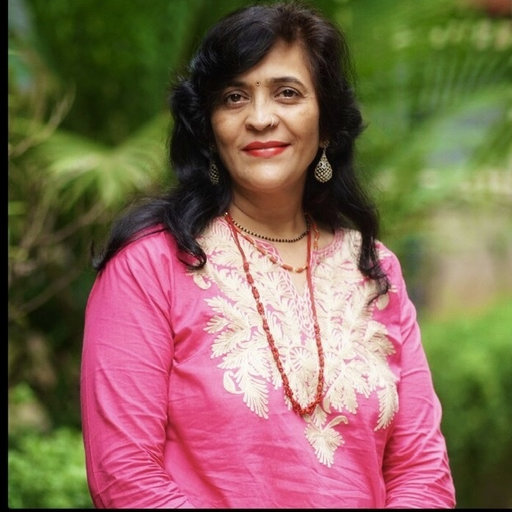
Dr. Sandhya R. Anvekar
Visvesvaraya Technological University, Belgaum, Karnataka, India
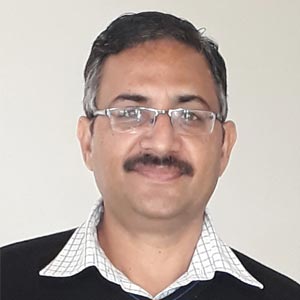
Dr. Avinash Panwar
Director, Center for Electronics Governance, Government of Rajasthan, Jaipur, Rajasthan, India
ADVISORY COMMITTEE
- Dr. Anand Nayyar, Duy Tan University, Da Nang, Viet Nam
- Dr. Muneesh Sethi, COER University, Roorkee, Uttarakhand, India
- Dr. Vinod Kumar Yadav, College of Technology and Engineering, Udaipur, Rajasthan, India
- Shivanjali Khare, University of New Haven, CT, USA
- Dr. Suni Pathk, Amity University, Jaipur, Rajasthan, India
- Dr. Sudhinder Chouhan, IIHMR University, Jaipur, Rajasthan, India
- Dr. Akash Talwariya, L&T Edutech, India
- Dr. Amandeep Gill, Vivekananda Global University, Jaipur, India
- Dr. Manvir Singh, Dev Bhoomi Uttarakhand University, Dehradun, Uttarakhand, India
- Dr. KG Sharma, Government Engineering College, Ajmer, Rajasthan, India
- Dr. Raunak Jangid, Geetanjali Institute of Technical Studies, Udaipur, Rajasthan, India
- Dr. Akash Saxena, Central University of Haryana, Mahendragarh, Haryana, India
- Dr. DPS Rathore, Former Scientist, Bhabha Atomic Research Centre, India
- Dr. Ram Naresh Saraswat, Manipal University Jaipur, Rajasthan, India
- Dr. Hanuman Prasad Agrawal, JK Lakshmipat University, Jaipur, Rajasthan, India
- Dr. Luxmi Sapra, Graphic Era University, Dehradun, Uttarakhand, India
- Dr. Varun Sapra, UPES, Uttarakhand, India
- Dr. Yogendra Narayan, Chandigarh University, Chandigarh, India
- Dr. Megha Vyas, GITS, Udaipur, Rajasthan, India
- Dr. Nilam Choudhary, Swami Keshvanand Institute of Technology Management & Gramothan, Jaipur, Rajasthan, India
- Prof. (Dr.) Arvind L. Chel, Dr. Babasaheb Ambedkar Marathwada University, Aurangabad, Maharashtra, India
- Dr. Shalini Kulshrestha, Jaipur Institute of Technology, Jaipur, Rajasthan, India
- Dr. Sandeep Gupta, Dr. K.N. Modi University, Rajasthan, India
- Dr. Manoj Gupta, VIT-AP University, Amaravati, Andhra Pradesh
- Dr. Ravi Goyal, National Institute of Agricultural Marketing, Jaipur, Rajasthan, India
- Dr. Nand Kishore Gupta, Poornima College of Engineering, Jaipur, Rajasthan, India
- Dr. Sheshang Degadwala, Sigma University, Vadodara, Gujrat, India
- Dr. Shanshank Sharma, Government Engineering College, Guwahati, Assam, India
- Dr. Richa Sharma, JK Lakshmipat University, Jaipur, India
Technical Program committe
- Dr. Mayuresh Sunil Pardesi, National Chiao Tung University, Taiwan, China
- Dr. Neeraj Gupta, Panipat Institute of Engineering and Technology, Panipat, Haryana, India
- Dr. Vignesh Agrawal, Sangam University, Bhilwara, Rajasthan, India
- Dr. Reena Grover, SRM Institute of Science and Technology, Delhi NCR Campus, Ghaziabad, Uttar Pradesh, India
- Dr. Gajendra Singh, Poornima Engineering College, Jaipur, Rajasthan, India
- Dr. Satyendra Singh, Bhartiya Skill Development Univeristy, Jaipur, Rajasthan, India
- Dr. Surendra Kumar, Shri Mata Vaishno Devi University, Jammu, India
- Dr. Parmil Kumar, Central University Jammu, Jammu, India
- Dr. RK Pandey, IIT Banaras, Uttar Pradesh, India
- Dr. Meena Kumar Gurjar, Jai Narayan Vyas University, Jodhpur, India
- Dr.Ruchi Gupta, Manav Rachna University Faridabad, Haryana, India
- Dr. Pushpendra Singh, JK Lakshmipat University, Jaipur, India
- Dr. Omveer Singh, Gautam Buddha University, Greater Noida, Uttar Pradesh, India
- Dr. Gesu Takur, COER University, Roorkee, Uttarakhand, India
- Dr. Shripati Vyas, GITS, Udaipur, Rajasthan, India
- Dr. Devendra Doda, Vivekanad Global University, Jaipur, Rajasthan, India
- Dr. Nagendra Swarnkar, Gyan Vihar University, Jaipur, Rajasthan, India
- Dr. Manoj Sahni, PDPU, Gujarat, India
- Prof. HC Taneja, DTU, Delhi, India
- Prof. Sanjeev Kumar, Agra University, Agra, Uttar Pradesh, India
- Dr. Keerti, Vishveshwarya Group of Institutions, Greater Noida, Uttar Pradesh, India
- Dr. PN Agarwal, IIT Roorke, Uttarakhand, India
- Dr. Jaya Gupta,JK Lakshmipat University, Jaipur, Rajasthan, Indiai
ABOUT Institute of Technical and Scientific Research
ITSR emphasis on research, industry partnerships, and entrepreneurial spirit equips organizations with the skills and mindset necessary for success in today's ever-evolving world. Through a forward-looking approach, ITSR Jaipur is nurturing a generation of professionals poised to lead in a rapidly evolving world.